
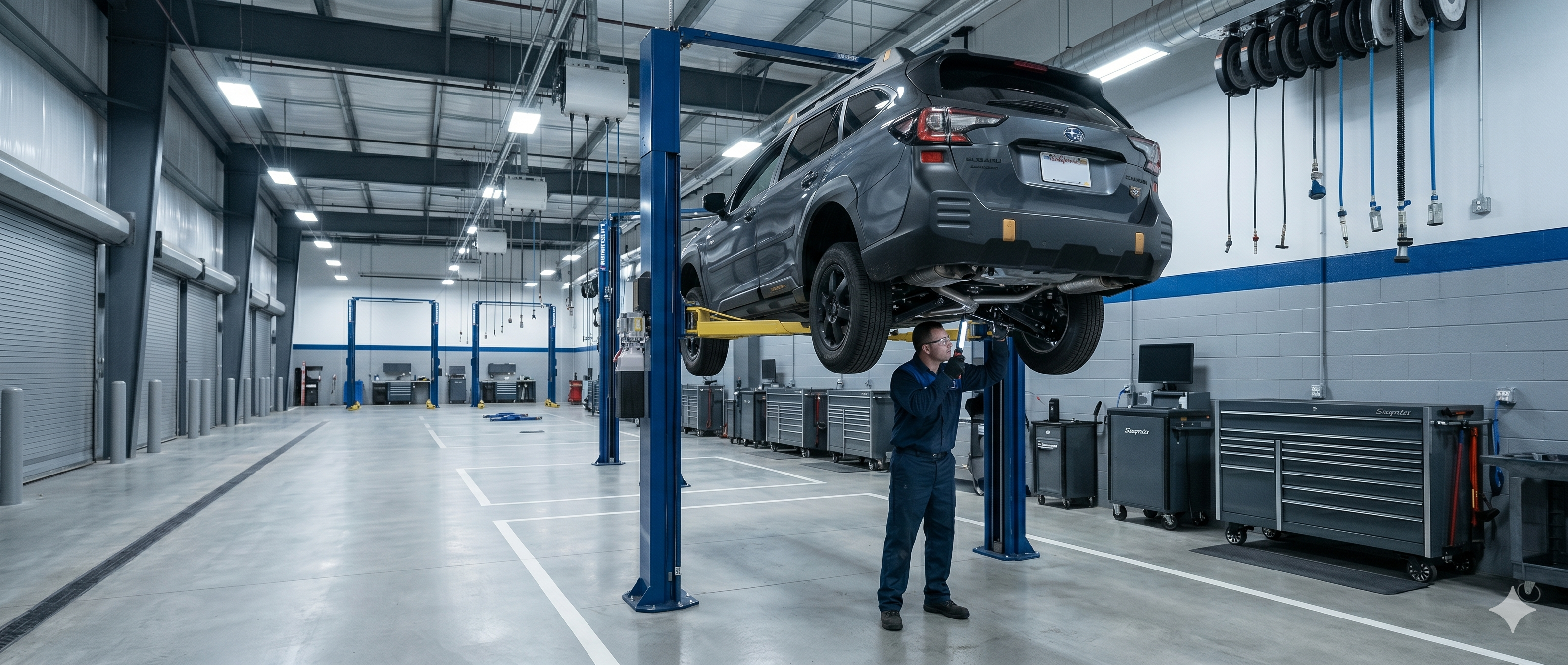
12% of dealer repairs are not fixed correctly on the first visit.
Every OEM invests heavily in the quality of the vehicle that leaves the factory. Far less attention goes to the quality of what happens when that vehicle comes back for service. According to J.D. Power's 2025 U.S. Customer Service Index Study, 12% of dealer repairs are not completed correctly on the first visit. For an industry that tracks defects per million in manufacturing, a one-in-eight failure rate at the service lane should be raising flags at the OEM level. It mostly isn't.
The top two reasons customers give for a failed repair visit are telling: 30% say the work performed did not actually correct the problem, and 28% say the required parts were not available. Neither of these is random. Both point to systemic issues in technician readiness, parts supply chains, and the quality of pre-visit diagnosis. These are areas where OEM infrastructure and support play a direct role.
What Happens After a Failed Repair
The loyalty math is stark. Among customers whose repair was not completed correctly on the first visit, only half say they returned or planned to return to the dealership. The other half effectively walked away. A small but notable 5% resolved the issue by going to an independent aftermarket facility. When a franchised dealer fails to fix a vehicle correctly, a portion of those customers do not give the brand a second chance. They find someone else.
This is where the first-fix problem stops being a dealer operations issue and starts being an OEM problem. The customer's relationship with the brand and their relationship with the dealer are, in the mind of the driver, largely the same thing. A frustrating service experience does not stay contained to the dealership. It shapes how that customer thinks about the vehicle, the manufacturer, and whether they buy the same brand again.
Warranty costs are one part of the equation. Repeat repairs create duplicate claims, technician hours, and parts spend that compounds quickly across a dealer network. But the longer-term cost is harder to quantify and arguably more significant: the erosion of post-purchase loyalty, which is one of the strongest predictors of repurchase intent.
The Visibility Gap
One of the core challenges for OEMs is that the data from failed service visits is fragmented. Dealers capture it differently, report it inconsistently, and often have an incentive to understate the problem. An OEM relying solely on warranty claim data or periodic CSI survey scores is looking at a lagging, incomplete picture. By the time a pattern emerges in aggregate data, the loyalty damage is already done.
Real-time feedback at the service lane level changes this. When customers can signal dissatisfaction immediately after a visit, before they've decided whether to return or not, there is still a window to recover the relationship. That window is short. Research consistently shows that service recovery is most effective when it happens within 24 to 48 hours of a poor experience. A survey that reaches a customer two weeks later is not a recovery tool. It is a post-mortem.
OEMs that build feedback loops capable of surfacing first-fix failures in close to real time gain two things. First, they can act on individual cases before the customer disengages entirely. Second, they accumulate signal across the network that reveals whether a failure pattern is isolated to one dealer or symptomatic of a wider issue, whether it is a parts problem, a training gap, or a diagnostic process that needs attention.
The Technician Factor
The J.D. Power data also surfaces a related issue worth noting. The satisfaction gap between electric vehicle owners and internal combustion engine owners remains wide, with mass market BEV owners rating their service experience 51 points lower than ICE owners. A significant driver of this gap is the shortage of well-trained EV technicians at the dealer level. First-fix rates for EVs are almost certainly lower than the industry average, compounding a loyalty problem in the segment where OEMs can least afford it.
This points to the same underlying issue from a different angle. Service quality is not solely determined by what happens at the individual dealer. It is shaped by the training, tooling, and systems that OEMs put in place across their network. When those fail, the customer pays the price. So does the brand.
What Good Looks Like
Fixing a repair correctly the first time is the baseline. The question for OEMs is whether they have the infrastructure to know when it is not happening, how quickly they find out, and what they do about it. Brands that close that feedback loop tightly, between the service event, the customer's experience of it, and the OEM's ability to act, are the ones building networks that retain customers rather than simply servicing vehicles.
The first-fix rate is not just a dealer scorecard metric. It is a signal about whether the brand is earning the loyalty it needs to sustain the next purchase cycle.