
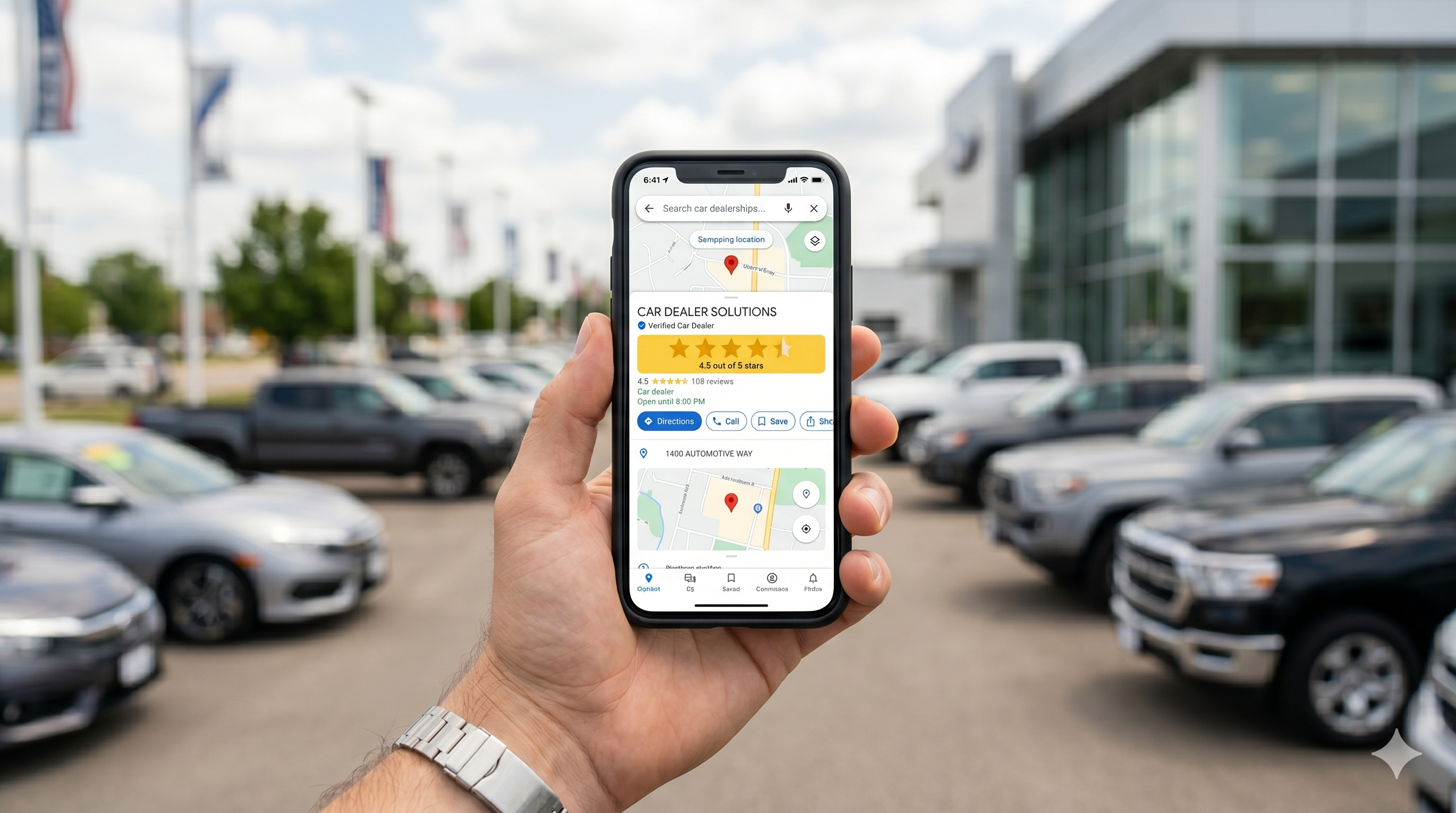
97% of consumers read Google reviews before choosing a dealership. BrightLocal and Cox Automotive data show why OEMs need to treat Google ratings as a brand-level CX metric, not a local reputation issue.
There is a moment in every car buyer's journey that happens entirely outside the control of the manufacturer. They have seen the ads, built the configuration online, maybe visited a brand website. Now they type the dealership name into Google. Before they call, before they book, before they walk in, they read the reviews.
What they find there shapes everything that follows.
This is not a fringe behavior. According to BrightLocal's 2026 Local Consumer Review Survey, 97% of consumers read reviews before choosing a local business. Google is the platform they trust most and the one they turn to first. Yet for most automotive OEMs, what happens in that moment sits outside the brand's performance framework entirely. It is categorized as a dealer reputation issue. Managed, if at all, at the local level. Measured, if ever, in aggregate.
That framing is worth revisiting.
The Number Consumers See First
When a customer searches for a dealership, the star rating is visible before they click anything. BrightLocal found that 31% of consumers will only consider a business rated 4.5 stars or higher, up from 17% the previous year. A further 68% require at least 4 stars. For a brand with 200 dealers, a third of which are sitting below that threshold on Google, the exposure is significant. Not as a reputational nuisance, but as a direct constraint on consideration before the customer ever engages with a salesperson or a service advisor.
That rating is not abstract. It is the first brand impression for a customer who has not yet decided whether to trust your network.
Recency Is Part of the Signal
The bar is not just about stars. BrightLocal's data shows that 74% of consumers only trust reviews written within the last three months, and 32% specifically look for reviews from the last two weeks. A dealership with 400 reviews and a 4.3 average, most of them from 18 months ago, is not performing as well as that score suggests. The review volume looks credible, but the recency gap tells a different story to the customer scanning the profile.
This creates a compounding problem for OEMs. CSI surveys capture a sample of customers at a fixed point in time. Google reviews are a continuous, real-time feed of customer sentiment. The two sources are not measuring the same thing, and when they diverge, it tends to be the Google rating that the next customer acts on.
The Retention Connection
Cox Automotive's 2025 Service Industry Study found that only 54% of owners of vehicles two years old or newer returned to their selling dealership for service in 2025, down from 72% in 2023. That is a substantial drop in two years. Cox identified poor communication and unexpected costs as the primary causes. Not price. Communication and trust.
Here is where the connection to Google reviews becomes structural. A customer who had a poor service experience, felt blindsided by a cost they were not prepared for, or could not get a clear answer on their vehicle's status, is not filling out a manufacturer survey. They are leaving a review on Google. Immediately. On their phone, in the car park.
That review then shapes the consideration of the next customer. And the one after that.
OEMs measuring retention through CSI are seeing the outcome. Google reviews are often where the cause is recorded first.
Visibility Has Expanded
The review landscape has also shifted in ways that increase the stakes at the brand level. BrightLocal's 2026 data found that 45% of consumers now use ChatGPT or other AI tools for local business recommendations, up from 6% the previous year. These systems pull from review sentiment, rating consistency, and structured business data when surfacing recommendations. A dealer network with patchy review profiles across locations will not perform consistently in AI-generated results, regardless of how strong the brand is at the OEM level.
The average consumer now uses six different review platforms. Google remains dominant, but the signal is distributed. Brand perception is being built and eroded across platforms that OEMs are not systematically monitoring.
What OEMs Actually Control
The argument against treating this as an OEM issue usually comes down to ownership. Dealers run their own operations. Reviews reflect local execution. The manufacturer can set standards, but cannot manage every customer interaction across every franchise location.
That is fair as far as it goes. But it conflates accountability with visibility.
OEMs already aggregate service quality data across their networks to identify underperformers, allocate support, and target training. The question is whether Google review performance is part of that picture, or whether it remains siloed as a local marketing issue. When a dealership's CSI score improves but its Google rating stagnates, or falls, something is missing from the measurement set.
The customers writing those reviews are the same customers OEMs are trying to retain. Their words, published publicly and read by the next generation of buyers, represent feedback that is granular, real-time, and directly tied to the moments that drive or erode loyalty.
Managing that as a brand-level signal, rather than leaving it to vary by location and initiative, is where the gap tends to sit for manufacturers trying to understand why retention numbers move the way they do.
Brands that treat Google review performance as a network-wide metric, alongside CSI and service satisfaction scores, get a more complete picture of where the customer experience is actually landing.